Is Business Administration The Same As Business Management. Business administration vs business management. Business administration and management both involve directing the operations of an organization.
Difference Between Management and Administration (with Comparison Chart from keydifferences.com What is a business?
A business is one type of company that is set up in order to help a customer. Its primary aim for the business is to earn money, however, there are many other goals that could be fulfilled through the operation. It is true that the primary goal of a company is to satisfy its customer's requirements and desires. According to Peter Drucker argues, this is the most accurate notion of business. Without clients company could not survive.
Internal functions are the functions executed within the organisation
Internal functions are the activities in the workplace in order to accomplish a specific set of goals. They can be a result of policies and procedures. To be effective, rules and regulations must be designed and implemented with care as well as communicated across the enterprise. The upper management of the organization needs to communicate regarding the need to monitor risks and mistakes is a significant issue and internal control must be an absolute priority. Furthermore, all employees must know their roles in internal controls and be equipped to communicate significant information upstream.
Sales and marketing activities are examples of internal roles. Sales managers are accountable to ensure that their products and services reach consumers on time. They must also ensure that they reach all areas where they are intended to reach. Apart from these primary work, internal departments include supporting functions that help the internal and external business processes to run efficiently. The managers of these functions give relevant information to management in order that they can take strategic decisions.
Internal controls reduce the risk of errors help safeguard information and stop fraud. Without internal controls, financial reporting is insecure and efficiency of operations is diminished. In addition, they can harm the image of the business. Consequently, it is important that you establish internal controls that guarantee the integrity of company's financial statements and to prevent fraud and theft.
Profit is the measurement of an organization's success
Profit is measured in both relative and absolute terms. In absolute terms, profit is the amount that you earn over a period of time. The way to define profit is the total amount of profit as a percentage of revenue. Profit is an important indicator for businesses, as it serves as an incentive for them to invest and take risks.
The goal of profitability is the first priority of any business. Without it, a business is doomed to fail. Profitability is determined by two aspects that are income and expenses. Profit is earned from the sales of a product service. It doesn't include the cost of getting capital. The expenses are the cost of running the company.
Profit is the profit businesses make after deducting expenses. The higher the profit margin, the better the business's financial standing. Another vital metric is the amount of customer satisfaction. A high degree of customer satisfaction can aid a business to enhance its services and products. Mailer newsletters and polls and customer survey are common methods of collecting this information.
Profit does not define success. It can mean different things to different businesses. For instance, a large-scale shop could be considered successful when it is profitable, or when it makes 22,000 dollars in profits per week. Breaking even is an achievement for a business in its initial year, but it's not an indicator of success.
Business is an extremely risky business
There are four main phases in the cycle of business. Each phase is different in its length and impact on the economy, such as levels of unemployment, inflation and consumer spending. These cycles are watched by central banks and are one of the most important factors that impact their monetary policies as well as short-term interest rates. These cycles are marked by a contraction, peak and trough. Recognizing the phases in the trading cycle of business can help investors to better understand the market conditions.
The first Phase of the cycle is called the expansion phase. The second phase is the contraction phase. In the stage of contraction the economy reaches its peak growth rate, and then stops growing. The result is that unemployment rates increase, and incomes to decrease. The economy also enters a bear market when investors sell their stock. The contraction phase is initiated by a swift rise in interest rates or financial instability, or massive inflation.
Small-sized companies as compared to. medium-sized companies
There are many ways to categorize companies. One is based on number of employees. A small-sized company is usually defined as having less of 50 employed. Mid-sized businesses typically have between 50 and $ 1 billion in revenue. Large companies usually have above one billion dollars in revenue. While big companies dominate some industries, most of the work and products are completed by small and mid-sized businesses.
The distinctness between small and medium-sized enterprises is significant as each kind of business employs different numbers of employees. Even though small businesses employ less than 100 individuals, mid-sized enterprises could employ tens of thousands. Small and mid-sized companies may benefit from other organizational software and company structures.
In addition to these variances The size of a company may affect the kind of workplace it provides. A small business may have greater flexibility, for instance through streamlining its communication and decision-making process. A smaller business could also have the ability to take action faster than larger corporations. A small-sized business might also offer flexible working hours working from home and flexible hours or even bonuses of a different kind.
One benefit of working with small businesses is the fact that they can be more imaginative and targeted in their sales approach. Furthermore, small businesses tend to be more inclined to experiment and test strategies to make sure they're effective. They also can make decisions quickly and less complex than large businesses. Smaller businesses, in addition, will often refer smaller businesses to their solution if they're pleased with the result.
Subchapter S corporations
Subchapter S corporations are closely related to other types of corporate. In essence, the procedures used to form an enterprise are the same but the primary distinction is the kind of ownership. Most commonly, individuals are able to own stock in S corporate entities. There are also some rules that govern who can be an investor.
If you're considering to start a company, you should speak with an expert. Tax and legal professionals will provide you with professional advice. Additionally, you can join CorpNet Partner Program. CorpNet Partner Program, a group of companies offering business setup and compliance. In referring clients, they may earn extra money.
In the case of an S business, you'll cut down on tax. Subchapter S corporations are not taxed at the corporate scale, meaning that the profits you generate aren't taxed twice. Furthermore, S corporations don't have to pay payroll taxes or Social Security or Medicare taxes. As a result, they're substantially more tax-efficient than different kinds of business structures.
However, the structure comes with some drawbacks, including the fact that shareholders must pay income tax upon the distribution of funds to them. Additionally, it can create some pressure on the company's ability to disperse cash regularly, which can affect the process of capital formation. This means it might not be the ideal choice for businesses that need a substantial investment.
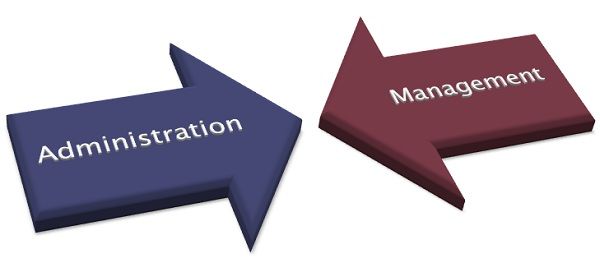
For most in the business world, the distinction between business management and business administration is clear. However, in most cases, management is focused. It may include managing employees, making decisions related to company growth,.
The Subjects Business Administration And Business Management Sound Extremely Similar Initially—But Is There More To It?
Business administration programs can lead to a certificate of completion or a.s. Careers in business administration and management. The administration is defined as an act of administering the whole organization by a group of people.
Business Administration Has A Broader Scope While Business Management Has A Limited Scope In An Organization.
A business management degree places more emphasis on effective leadership and management strategies. Management is an activity of business and functional level, whereas. In any business venture the collective responsibility of the personnel running it, is to make it profitable and work with a.
Office Management Is A Set Of Fixed Job To Maintain The Routine Works Of Documentation.
The business administration field focuses on giving students a broad understanding of business operations, whereas the management field deals with planning,. In the business world, business management and business administration are the same unless a certain company defines the differences. Business administration and management both involve directing the operations of an organization.
Curriculum In Most Business Administration Programs Covers Core.
The difference in the degrees for business administration and business management are based on the focuses of the education. Business administration vs business management. Although administration and management might sound the same, there is a simple way to separate the two.
As Stated Earlier, Both Business Management And Administration Degrees Typically Include The Same Core Subjects, Including Marketing, Accounting, Economics, Finance, And Management.
Business management and business administration degrees often have many of the same courses: Business administration involves organizing and using resources in a specific department or division such as accounting or inventory. The short answer is that business administration and.
Share :
Post a Comment
for "Is Business Administration The Same As Business Management"
Post a Comment for "Is Business Administration The Same As Business Management"