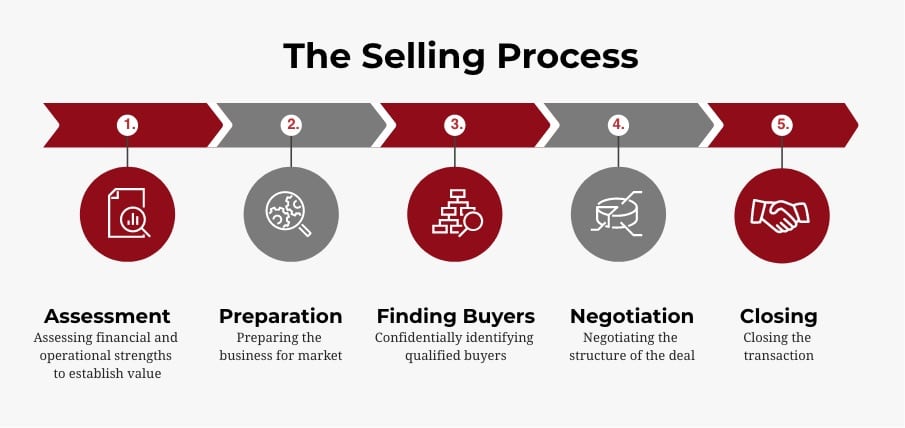
Process Of Selling A Business. Here is a summary of essential actions that both the buyer and seller should take before the closing:. Locate a quality business broker or m&a firm.
Sell Your Business l Free Analysis l The Bridlebrook Group from www.bridlebrookgroup.com What Is a Business?
Business is a sort of organization which is organized to assist a client. The principal objective of an organization is profit, but there are a variety of things that can happen by the company. In the end, however, the final goal of business is to satisfy its customer's demands and desires. As Peter Drucker argues, this is the only true understanding of the term "business. With no clients, a business will fail to thrive.
Internal functions encompass the operations carried out within the organization
Internal functions are those executed within the organisation for the achievement of a certain set of goals. This may include policies and procedures. For them to be effective, policies and procedures must be meticulously designed, implemented and communicated throughout the company. The top management in the company should convey that the responsibility to prevent hazards and errors is a critical issue and internal control should be given the highest priority. Also, all employees must become aware of the roles in internal control and have the means to relay important information upstream.
Marketing and sales activities are two instances of internal functions. Sales managers are accountable of ensuring that the products and services get to the people they are selling to promptly. They should also make sure that they can reach all areas they are focused. In addition to these core actions, internal tasks include services that support the internal and outside business functions to run efficiently. Managers of these functions supply an overview of the business to management so they can make strategic choices.
Internal controls assist in preventing mistakes ensure information security, reduce the risk of errors and prevent fraud. Without internal controls, financial reporting becomes inadequate and the operational efficiency gets diminished. Additionally, they can damage the image of the business. So, it's important that you establish internal controls that guarantee the integrity of firm's financial records and also to avoid theft and fraud.
Profit is the metric used to determine the success of a company
Profit can be defined in both absolute and relative terms. In absolute terms, the term "profit" is the sum of money that is earned over a particular time. The way to define profit is the quantity of profit made as a percent of revenues. Profit is an important indicator for businesses, as it can be used as a motivation to make investments and take risks.
Profitability is the primary goal of any business. Without it, a company is doomed to fail. Profitability is determined by two elements both expenses and income. Income is money earned from the purchase of a service. It does not include the cost of acquiring capital. The expenses are the cost of managing the company.
Profit is the financial gain an enterprise earns after deducting expenses. The higher the margin of profit more profitable the business's financial situation. Another key indicator is the degree of satisfaction with the customer. A high level of customer happiness can help a company improve its products and services. Newsletters via email, polls and customer surveys are the most common ways to collect this data.
Profit does not define success. It means various things to different companies. For example, a high-street shop might be successful when it is able to break even and/or when it has an income of around PS2,000 per week. Breaking even can be a significant achievement for a business in its first yearof operation, however, it's not an indicator for achievement.
The fluctuations in the market make business more risky
There are four phases in the cycle of business. Each phase is different in the duration of its effects on the economy, including unemployment rates, inflation and consumer spending. These cycles are watched by central banks, and are among the most important factors that impact their monetary policies and interest rates. They are characterized by a contraction, peak and the trough. Knowing the stages of the business cycle can assist investors better understand the current economic situation.
The initial section of the cycle is called the expansion phase, while the subsequent phase is known as the contraction phase. The contraction phase is when the economy hits its maximum growth rate but it does not keep growing. This causes unemployment rates to increase, while incomes drop. The economy can also be in a bear market when investors sell their holdings. The contraction phase is initiated by a dramatic rise in interest rates in the event of a financial meltdown, or the escalating inflation.
Small-sized companies in comparison to. medium-sized companies
There are a variety of ways to categorize companies. One is by the number of employees. Small businesses are generally defined as having fewer then 50 staff. A mid-sized firm has between 50 to around $1 billion in revenue. Larger companies typically have more than one billion dollars in revenue. Although big corporations do dominate certain industries, most of the work and production is completed by small and mid-sized businesses.
The contrast between mid-sized as well as small firms is vital because each category of business employs a different quantity of people. Small businesses generally employ less than a hundred employees, mid-sized companies could employ thousands of people. Small and mid-sized firms may also benefit from different organizational corporate structures and software.
Alongside these distinctions apart from these, the size and size of a business can affect the type of workplace environment it provides. A smaller-sized business could have greater flexibility, for instance by streamlining its communications and decision-making processes. A smaller organization may can implement changes faster than larger businesses. A small-sized business might also provide flexible hours as well as work-from-home options and other bonuses.
One advantage when working with small companies is the fact that they can be more innovative and targeted in their sales strategy. In addition, small companies are more likely to try and test new solutions to ensure their solutions are efficient. They also make their decisions more quickly and less complex when compared with large corporations. Furthermore, small businesses frequently refer small businesses to their solution if they are happy with the solution.
Subchapter S corporations
Subchapter S corporations are closely related with other types. The fundamental procedures for incorporating for a company are the same however the main difference is the type of ownership. In general, individuals are permitted to own shares in S corporation. There are rules about who is a shareholder.
If you have an idea to establish a company, it is recommended to talk with a professional. Tax and legal experts are able to provide expert guidance. There is also with the CorpNet Partner Program, a collection of businesses that offer business registration and compliance assistance. When you refer clients to you, you will earn additional income.
If you are an S business, you'll benefit from tax savings. Subchapter S corporations aren't taxed at the corporate level, which means the profits you earn are not taxed twice. Furthermore, S corporations don't have to pay for payroll taxes, or Social Security or Medicare taxes. Since they don't pay taxes, they're significantly less tax efficient than other kinds of business structures.
However, this model has disadvantages, for instance the fact that shareholders must pay income tax on their distributions. Furthermore, it may create stress for companies to disperse cash regularly which could negatively impact the process of capital formation. Thus, it may not be the most appropriate option for companies that require huge investments.
Firstly, we equip ourselves with your company’s vision and philosophy. A template is a fair starting point, but it is only that—a starting point. While you certainly have the option to not list with a broker at all, accept the fact that selling.
Firstly, We Equip Ourselves With Your Company’s Vision And Philosophy.
There is much to do in preparing the business, providing documentation, finding a buyer,. Selling your business is a long process, full of ups and downs. Learn about the business selling process at five star business brokers.
Use Territory Preferences And Advanced Company Search Tools To Find Leads.
From the moment you list with us to the final handshake at closing, the experts at seiler tucker are here. When considering the sale of a business, a business owner has a wide variety of transaction options to sell the. Synergy business brokers has developed a 15 step process to sell your business for the highest price efficiently and confidentially.
Ad See Why Sales Navigator Drives 5% Higher Win Rates When Closing Deals.
Here is a summary of essential actions that both the buyer and seller should take before the closing:. 10 critical steps for selling a business 1. It is a complex process and one which can take 9 months to a year to complete.
Use Territory Preferences And Advanced Company Search Tools To Find Leads.
Some of the steps occur simultaneously, so it can be a. Ad see why sales navigator drives 5% higher win rates when closing deals. After considering your business exit plan, review our 7 step process of selling a business:
The Process Of Selling A Business Starts Here.
While you certainly have the option to not list with a broker at all, accept the fact that selling. Allocation of the purchase price: Define the owner’s goals and potential exit strategies.
Share :
Post a Comment
for "Process Of Selling A Business"
Post a Comment for "Process Of Selling A Business"