How Storytelling In Business Can Drive Better Results. Storytelling helps businesses stand out. There are many benefits to using storytelling in business, including:
How Effective Storytelling can Drive Business Results for Clients from progressions.prsa.org What Is a Business?
A business is a form of organization which is organized so that it can serve customers. The most important goal of the business is to earn money, however, there are many other goals that can be achieved by the company. However, the most important goal of a business will be to satisfy a consumer's needs and wants. According to Peter Drucker argues, this is the most accurate understanding of the term "business. The absence of clients means that a company can't survive.
Internal functions are the activities undertaken within the organization.
Internal functions are the activities undertaken within the organization to achieve a set of objectives. These activities may include policy and procedures. To make a difference, rules and regulations must be meticulously designed, implemented as well as communicated across the enterprise. The top management in the company has to send a clear signal that the responsibility of preventing risks and errors is a critical issue and internal control should be a top priority. Furthermore, employees must realize their role in internal controls and be equipped to relay significant information upstream.
Sales and marketing activities are examples of internal roles. Sales managers are responsible to ensure that their products as well as services are delivered to consumers on time. They are also responsible for ensuring that they are available to all areas they are specifically targeted. Beyond these core operations, internal roles include support functions that enable the internal and the external business operations to run efficiently. Managers of these functions offer their management with the information needed so it can make decisions that are strategic.
Internal controls can prevent mistakes as well as protect information and protect against fraud. Without internal control, financial reporting can be uncertain and operational efficiency could be impaired. They can also affect the reputation of the company. It is therefore crucial to develop internal controls to ensure the accuracy of the company's financial statements and to prevent fraud and theft.
Profit is the measure of your business's success
Profit is measured in both absolute and relative terms. Absolutely, profit is the sum of money made for a given amount of time. In terms of ratio, profit is the amount of the profit earned as a percentage of revenue. Profit is a crucial indicator for businesses as it can be used as a motivation to invest and also take risk.
Profitability is the key goal of any business. Without it, the business is doomed to fail. Profitability is determined by two main factors the income and expenses. The term "income" refers to the money that is earned through the sale of an item or service. It doesn't include the expense of obtaining capital. The expense is the cost of running the business.
Profit refers to the financial gain the business earns after deducting expenses. The higher the profit margin it is, the better its finances. Another vital metric is the quality of the customer's satisfaction. A high degree of customer satisfaction can help a firm enhance its services and products. Email newsletters, polls and customer survey are common methods of collecting this data.
Profit does not define success. It can mean different things to different businesses. For example, a high street shop might be successful when they break even, or when it makes the equivalent of a profit of around $2000 per week. Being able to break even is an achievement for a business in its first year, however, it's not an indicator for the success.
Trade cycles make business one of the most risky activities
There are four phases in the cycle of business. Each phase varies in its length and effects the economy, including job rates, inflation and consumer spending. These cycles are monitored by central banks and are one of the major factors that determine their monetary policies and short-term interest rates. These cycles are marked by a peak, contraction and trough. Understanding the different phases of the business trade cycle helps investors better understand financial conditions.
The initial stage of the trade cycle is called the expansion phase, and the second phase is the contraction phase. The contraction phase is when the economy hits its maximum growth rate, and it ceases to grow. This causes unemployment rates to rise, and wages to fall. The economy also enters a bear market when investors sell their stock. The contraction phase could be triggered by a rapid increase in interest rates or by a financial emergency or excessive inflation.
Small-sized companies against. medium-sized companies
There are many ways of categorizing companies. One approach is to classify them by the amount of employees. Small businesses are generally defined as having fewer than fifty employees. Mid-sized companies have between 50 and the amount of $1 billion in revenue. Large companies usually exceed 1,0 billion in revenue. Although large corporations dominate certain industries the work and services are done by small and mid-sized businesses.
The contrast between mid-sized as well as small firms is vital because every type of business employs a distinct number of people. Though small-sized companies usually employ less than 100 individuals, mid-sized businesses can employ thousands of people. Mid-sized and small-sized businesses can also benefit from various organizational software and company structures.
Beyond these differences apart from these, the size and size of a business may impact the type of work environment it has. Smaller companies might have more flexibility, as an example that it has streamlined its communication and decision-making processes. A smaller-sized business might also be able to make changes faster than larger businesses. Smaller companies might offer flexible schedules including work from home opportunities and odd bonus.
One benefit when working with small companies is the fact that they can be more innovative and specific in their sales approach. Also, small businesses tend to be more inclined to experiment and test strategies to make sure they're working. They also make their decisions more quickly and have less complexity when compared with large corporations. Furthermore, small businesses often refer other small businesses to their solution if they're satisfied with it.
Subchapter S corporations
Subchapter S corporations are closely linked to the various types of corporate. The basic procedures to incorporate any business are the exact same however the most significant difference is the kind of ownership. In general, individuals are permitted to own stock in S businesses. There are limitations on who can be an investor.
If you're thinking to launch a business you must talk to an expert. Tax and legal experts can offer you expert guidance. Additionally, you can join with the CorpNet Partner Program, a group of companies that offer business creation and compliance services. By referring clients, you can earn additional revenue.
As an S corporation, you will cut down on tax. Subchapter S corporations aren't taxed at the corporate scale, meaning that the profits you generate aren't taxed twice. In addition, S corporations don't have to pay any payroll tax or Social Security or Medicare taxes. Due to this, they're far more tax efficient than other kinds of business entity.
But, it has certain drawbacks, such as the fact that shareholders are required to pay tax upon the distribution of funds to them. Also, it can put pressure for the company to distribute cash frequently which could affect capital formation. It may therefore not be the right choice for companies that require large investments.
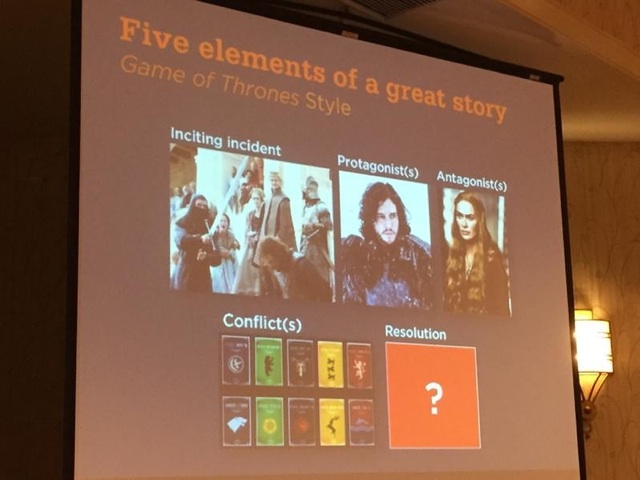
Senior leaders choose a value they want the organisation to explore and understand. Set up a compelling conflict. Storytelling for business resultstop speechwriter helps you build your business storytelling muscles to win more customers and grow your brandrating:
It Demonstrates How Your Business Is Unique.
Image by tumisu from pixabay. Conflict is what transforms loose information into a narrative. Audience engagement is usually highest at the start and conclusion of a speech.
And Don’t Forget That Every Good Story Has A Closing.
A good story makes us think and feel, and speaks to us in ways that. Set up a compelling conflict. Stories make up around 65% of our daily interactions.
People Often Associate Stories As Simple Tools For Leisure And Entertainment, But These Can Also Be Powerful Especially If You're An Actor!
Stories help to create a sense of purpose, and businesses with purpose ultimately stand out. Review the history of storytelling to better understand its role and impact in the present time. Storytelling can do miracles for a business:
In Today's World, Customers Crave Transparency And Want To Know More About Companies, How They Conduct Their Business, How They Treat Their.
We are 22 times more likely to remember a fact when it has been presented within a story. We've been known to overspend by 132,000% on a trinket worth $1.49 when there's a captivating fictitious story attached. Use your resolution to wrap up the story, provide context around the conflict and leave your audience with a call to action.
4.1 Out Of 540 Reviews1 Total.
The more detailed and relevant you can make this for the buyer, the better they’ll be able to imagine themselves in the shoes of the hero. And that’s exactly what we’re after here. They are also able to relate this.
Share :
Post a Comment
for "How Storytelling In Business Can Drive Better Results"
Post a Comment for "How Storytelling In Business Can Drive Better Results"