App.json Business Central. Check out the latest business central updates! The app.json file must specify an azure application insights resource.
Working with Multiple AL Projects in One Workspace Using Visual Studio from archerpoint.com What is a Business?
The term "business" refers to a specific type of entity that is created to assist a client. The primary objective of companies is profit however, there are many other goals that are achievable by the company. Ultimately, though, the final goal of business is to satisfy a client's requirements and desires. According to Peter Drucker argues, this is the only true way to define business. With no clients, a business cannot last.
Internal functions include the activities done within the business
Internal functions refer to the tasks executed within the organisation that are designed to meet a set of goals. These may be related to policies and procedures. To be effective policies and procedures need to be carefully developed, implemented and communicated across the organization. The leaders of an organization must communicate clearly that the responsibility to prevent risks and mistakes is a crucial issue, and that internal control should be given the highest priority. Furthermore, employees must become aware of the roles in internal control and have the capacity to relay important information upstream.
Marketing and sales include examples of internal functions. Sales managers are responsible for ensuring that their goods as well as services are delivered to consumers on time. They also have to ensure that they reach all areas where they are focused. In addition to these main routines, internal operations include supporting functions that help the internal and the external business operations to run efficiently. Managers of these functions provide details to management so that they can make informed decisions.
Internal controls help prevent errors, protect information, and safeguard against fraud. Without internal control, financial reporting can be inadequate and the operational efficiency gets diminished. Additionally, they may impact the reputation of the company. Therefore, it is essential the establishment of internal controls to ensure the integrity of firm's financial records and also to avoid fraud and theft.
Profit is the measure of your business's success
Profit can be measured in both absolute and relative terms. In terms of absolutes, profit is the amount of profit earned over a specific period of time. In terms of percentages, profit is the amount of earnings as a proportion of revenues. Profit is an important gauge for businesses because it creates an incentive to invest and take risks.
Profitability is a primary objective for any company. Without it, the business will fail. Profitability is determined by two aspects both expenses and income. Earnings are the earnings earned from the sale of an item or service. It doesn't include the expense of acquiring capital. Costs are the expenses of operating the company.
Profit is the financial gain the business earns after deducting expenses. The higher the margin of profit more profitable the business's financial standing. Another important factor is the amount of customer satisfaction. A high level of satisfaction can help a company improve its products and services. Mailer newsletters and polls or surveys with customers are typical methods of gathering information about customers.
Profit does not define success. It is a different concept to different businesses. For instance, a large-scale shop might be successful when it breaks even, or it is able to make the equivalent of a profit of around $2000 per week. Achieving break-even is a major achievement for a company in its first year, however, it's far from an indicator for an overall success.
Trade cycles make business more risky
There are four phases in the cycle of business. Each phase differs in its length and effects the economy, including inflation, employment rates, and the consumption of consumers. These cycles are watched by central banks and are one of the main factors that influence their monetary policy and short-term interest rates. These cycles are characterized by a peak, contraction and trough. Understanding the different phases of the trading cycle of business can help investors in understanding the economic situation.
The first phase of the business cycle is known as the expansion phase, and the next phase is the contraction phase. In the contraction phase the economy reaches its maximum growth rate but it does not keep growing. This causes unemployment rates to rise, and incomes to drop. The economy also enters into a bear market, as investors sell their shares. The contraction phase can be caused by an explosive rise in interest rates or by a financial emergency or excessive inflation.
Small-sized companies are different from. medium-sized companies
There are many ways to classify businesses. One way is by the number of employees. A small-sized company is usually defined as having fewer 50 workers. A mid-sized company has between 50 and $1 billion in revenue. Large businesses are usually above 1.25 billion in revenue. Although big corporations do dominate certain industries, most of their work and products are accomplished by smaller and medium-sized companies.
The differentiation between mid-sized and small businesses is crucial since each category of business employs various numbers of people. While small companies generally employ less than a hundred employees, mid-sized firms could employ tens of thousands. Small and medium-sized companies could also benefit from different organizational methods and structures for the company.
Additionally, to these distinct differences, the size of a company can impact the kind of workplace it creates. A smaller company may be able to offer more flexibilityfor instance it can streamline its communication and decision-making process. A smaller business may also have the ability to take action more quickly than a larger business. Small businesses can also offer flexible schedules or work from home work options and even odd bonuses.
One benefit of working with small businesses is that they are more innovative and specific in their sales strategy. Furthermore, small companies tend to be more inclined to experiment and test ideas to ensure they're working. They also make decisions more quickly and more efficiently that large companies. Additionally, small companies will frequently refer other small businesses to their solution when they are pleased with their solution.
Subchapter S corporations
Subchapter S corporations are closely connected to other types of corporations. The primary procedures for incorporating and operate a business are identical with the exception that the primary difference is the type of ownership. A majority of individuals are allowed to own shares in S corporations. There are limitations on who can be a shareholder.
If you're thinking to establish a company, you should seek advice from professionals. Tax and legal experts are able to provide expert guidance. Also, you can sign up for in the CorpNet Partner Program, a group of companies that offer business setup and compliance. If you refer clients, you may earn extra money.
In the case of an S corporation, you'll be able to save tax. Subchapter S corporations are not taxed at the corporate level, which means your profits are not taxed twice. Additionally, S corporations don't have to pay taxes on payroll or Social Security or Medicare taxes. This means they're much more tax-efficient than other types of businesses.
However, the structure comes with some disadvantages, including the fact that shareholders must pay income tax for the amounts they are given. Additionally, it could create pressure for the company to distribute cash often as it can negatively impact the formation of capital. Thus, it may not be the most appropriate option for businesses that need large investments.
Check out the latest business central updates! An object or an array can be root of the json file / document. Check out the latest business central updates!
Learn About The Key Capabilities And Features Of Dynamics 365 Business Central And Experience Some Of The New Features.
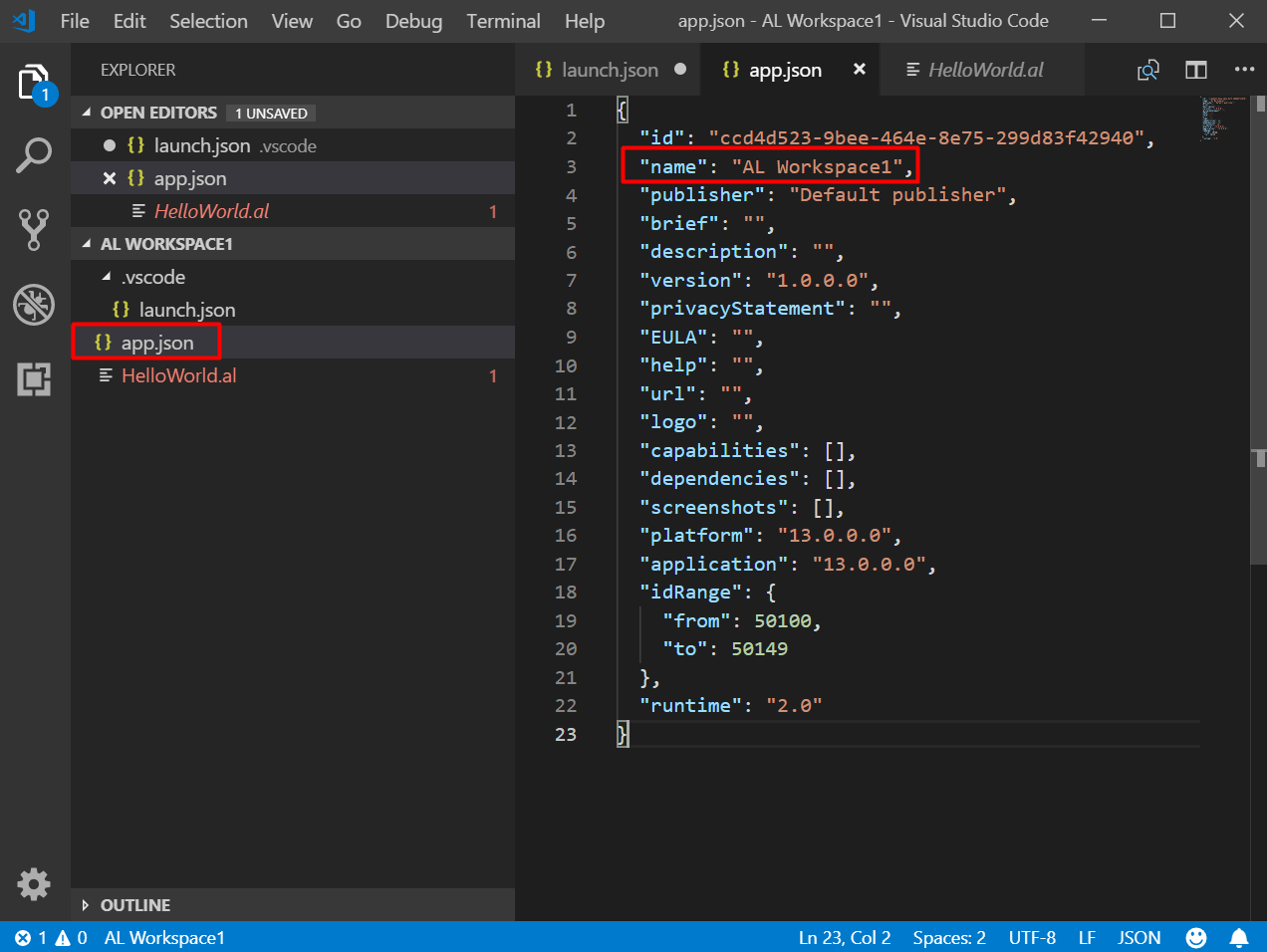
Business central object and system elements; Write the data in json file3. The app.json file is, together with the launch.json file, automatically generated when you create a.
An Object Or An Array Can Be Root Of The Json File / Document.
1) this is the resulted json file/the json to create: Following are the data types supported in json objects. Consume json in business central.
Check Out The Latest Business Central Updates!
Business central 2019 release wave 2 and later. You must have heard the latest news: The app.json file must specify an azure application insights resource.
If You Are Going To Create Azure Vms For Your Business Central Sandbox Environment, You Also Need To Set The Resource Group Name, The Location And The Properties.
Interacting with rest apis using json from within business central: What you need to do on all your apps (appsource or pte apps) is simply: Check out the latest business central updates!
This App Encapsulates All The Dependencies From The System Application And Base.
Business central doesn’t allow overwrites. We currently do not have dedicated dev support via the dynamics 365 business central forums, but i wanted to provide you some additional. When you submit an updated version of your app, you must increase the version number in the app's json/manifest files.
Post a Comment for "App.Json Business Central"