Mobile Learning Apps For Business. The educational app market is full of amazing and unique applications. Sign up for a free talentcards account and start creating employee training courses today!
Elearning Mobile Apps for Corporate TrainingMobile Learning Apps from www.swiftelearningservices.com What Is a Business?
A company is a type of company which is established so that it can serve customers. The principal goal of an organization is profit, however there are other goals that can be achieved by the company. However, the ultimate aim of a business is to satisfy its customer's needs and wants. As Peter Drucker argues, this is the sole true idea of business. A business that does not have customers company cannot survive.
Internal functions are the activities performed within the company
Internal functions are those that are carried out by the company to meet a specified set of goals. This may include policies and procedures. To be effective guidelines and policies must be carefully developed, implemented and distributed throughout the organization. The leaders of an organization must communicate clearly that the responsibility to prevent mistakes and risks is a vital issue, and internal control must be at the top of the list. Furthermore, employees must acknowledge their role in internal control and have the means to share important information with the upstream.
Marketing and sales are examples of internal roles. Sales managers are accountable of ensuring that the products or services reach their customers at the right time. They are also responsible for ensuring that they reach all areas for which they are intended to reach. Apart from these primary activities, internal functions include support functions to allow internal and the external business operations to run efficiently. Managers of these functions provide information to management , so they can take strategic decisions.
Internal controls aid in preventing errors to safeguard information, as well as prevent fraud. Without internal controls, financial report is unstable and operational efficiency is impaired. Moreover, they can affect the image of the business. It is therefore crucial that you establish internal controls that make sure that the integrity is maintained in the accounting and financial reports of the business and avoid theft and fraud.
Profit is the metric used to determine achievement of any business
Profit can be determined in both absolute and relative terms. In terms of absolutes, profit is the amount of profit earned for a certain amount of time. It is a relative term, meaning that profit refers to the volume of profits earned in a proportion of revenue. Profit is an important indicator for business, as it provides a reason to invest and take risk.
Profitability is the primary goal of any business. Without it, businesses will fail. Profitability is determined by two variables which are expenses and income. It is the sum of money earned from the sale of a product or service. It is not inclusive of the expense of acquiring capital. Costs are the expenses of running the company.
Profit is the amount of money the business earns after deducting expenses. The higher the margin of profit is, the better the company's overall financial health. Another crucial metric is the quality of the customer's satisfaction. A high degree of customer satisfaction is a good indicator of whether a company can improve its products and services. Surveys, emails, and customer surveys are typical methods to gather this data.
Profit does not define success. It can mean different things to various businesses. For example, a street shop could be considered successful when it's at break-even, or when it generates the equivalent of a profit of around $2000 per week. Achieving break-even is a major achievement for a company in its first year, however, it's not an indicator for success.
The fluctuations in the market make business a risky activity
There are four phases in the business trade cycle. Each phase is different in time and can impact the economy, such as levels of unemployment, inflation and the consumption of consumers. These cycles are watched by central banks, and are among their main influences on their monetary policies and short-term interest rates. These cycles are marked by a peak, contraction, and the trough. Understanding the different phases of the business cycle can aid investors to better understand the business environment.
The initial step of business cycle is the expansion phase. The second phase is called the contraction phase. The contraction phase is when the economy reaches its peak growth rate and doesn't continue to grow. The result is that unemployment rates climb, while incomes drop. The economy also enters into a bear market, as investors sell their shares. The contraction phase could be initiated by a dramatic rise in interest rates as well as a financial crisis or the escalating inflation.
Small-sized companies against. mid-sized businesses
There are many ways to categorize firms. One method is based on the number of employees. A small company is typically defined as having less of 50 employed. A mid-sized enterprise has between 50 and one billion dollars in revenue. Large companies usually exceed one billion dollars in revenue. While large companies do dominate certain industries their work and products are carried out by smaller and mid-sized enterprises.
The contrast between mid-sized as well as small businesses is significant because each kind of business employs a different number of people. Though small-sized companies usually employ less than a hundred people, mid-sized businesses could employ thousands of people. Smaller and mid-sized business may benefit from a variety of organizational technology and corporate structures.
Additionally, to these distinct differences The size of a company will affect the kind the work environment they provide. A smaller business might have more flexibility, for example by streamlining its communications and decision-making process. A smaller business may also be able to enact changes quicker than a larger corporation. Smaller businesses might offer flexible work schedules as well as work-from-home options and other bonuses.
One benefit when working with small companies is the fact that they are more creative and precise in their sales strategy. Furthermore, small companies are more likely to try and test solutions to ensure they're working. They also take decisions more quickly and less complex as compared to large companies. Smaller companies, too, will often refer other small companies to their solution when they're satisfied with the results.
Subchapter S corporations
Subchapter S corporations are closely related to other types of companies. The basics of incorporating any business are the exact same however the main difference is the type of ownership. A majority of individuals are allowed to own shares in S organizations. There are rules that govern who can be an investor.
If you are considering to begin a business, you should speak with a professional. Legal and tax professionals can provide you with expert guidance. You can also sign up to an organization called the CorpNet Partner Program, a group of companies offering business setup and compliance. By referring clients, you may earn extra money.
When you're an S corporation, you'll benefit from tax savings. Subchapter S corporations are not taxed at the corporate level. Therefore, your profits aren't taxed twice. In addition, S corporations don't have to pay payroll taxes or Social Security or Medicare taxes. As a result, they're better tax efficient than most kinds of business entity.
However, it does have some disadvantages, including the fact that shareholders must pay income tax upon the distribution of funds to them. Also, it can put an obligation for the company distribute cash on a regular basis in order to affect the development of capital. So, it might not be the most appropriate option for companies that require a substantial investment.
4.6 (17) meet talentcards, the mobile learning app that puts training in your people's hands, no matter where they are in the world. Qstream is another mobile learning app that can help you scale your corporate training programs and track each workers’ learning. Ad are your employees on the go?
For Instance, Integration Of Collaborative.
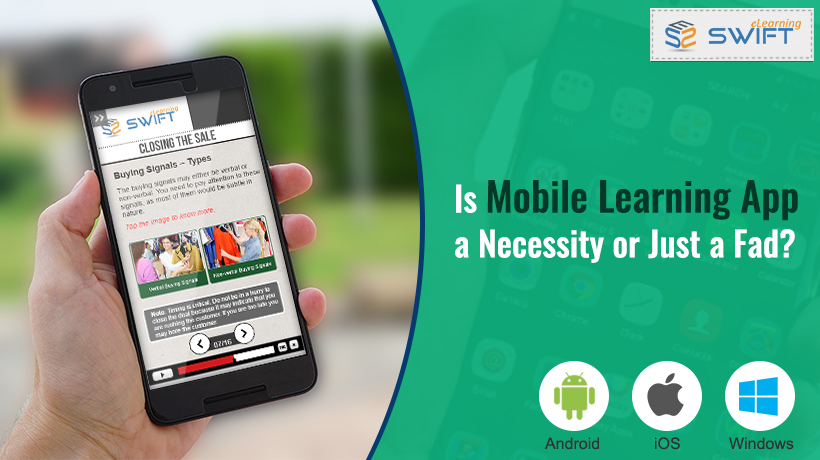
With 47% of organisations already providing a mobile training solution, the mlearning revolution is now in full swing. Here’re a few essential steps to developing educational apps. Benefits of mobile learning apps in business.
Qstream Is Another Mobile Learning App That Can Help You Scale Your Corporate Training Programs And Track Each Workers’ Learning.
Challenges for developing mobile apps with machine learning. Although it can sometimes seem like a big investment,. Go with a mobile corporate training solution.
It Goes Beyond Those Common Subjects And Offers Classes To.
With its virtual classroom functionality, learners can log in to their lms. Sign up for a free talentcards account and start creating employee training courses today! Unlike traditional lmss and training software, talentcards.
Check Out Our List Of Mobile Learning Apps Below To Get Started With Your Own Corporate Training Initiatives.
When learning is made accessible and easy, more people will engage with it. Mac, windows, linux, ios native, android native,. Ad are your employees on the go?
And With The Lms365 Mobile App, Mobile Learning Can Take Place Anytime, Anywhere.
Duolingo stands out among language learning apps, and among education apps overall. There is an increased use of microlearning and gamification in recent times thus leading to an increase in adoption of. There is an increased use of microlearning and gamification in recent times thus leading to an increase in adoption of.
Share :
Post a Comment
for "Mobile Learning Apps For Business"
Post a Comment for "Mobile Learning Apps For Business"