What Does Bottom Line Mean In Business. From purchase to sales, they. The top line is a company’s gross revenues, or total sales, before subtracting any operational costs.
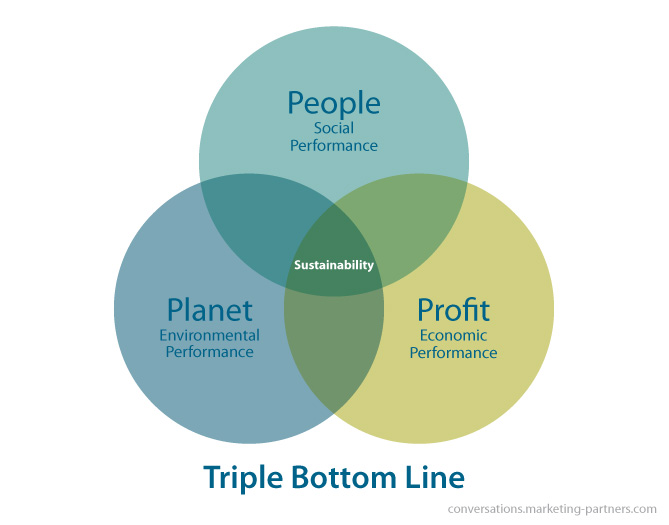
Anatomy of Effective infographic Design from conversations.marketing-partners.com What is a business?
A business can be described as a kind of entity that is created to support a particular customer. One of the primary goals of a company is profit but there are a variety of goals that can be achieved through the business. Ultimately, though, the most important goal of a business is to satisfy a client's desires and needs. As Peter Drucker argues, this is the only true notion of business. The absence of clients means that a business cannot survive.
Internal functions comprise the tasks done within the business
Internal functions are actions that are carried out by the company to achieve a set of objectives. They may involve policies and procedures. To be effective, these processes and policies need to be meticulously designed, implemented and shared throughout the company. The upper management of the organization needs to communicate that the responsibility to control errors and risks is serious issue and that internal control should be top of the list. Additionally, every employee must be aware of their roles in internal control , and are equipped for communicating important information downstream.
Marketing and sales activities can be a good example of internal activities. Sales managers are responsible to ensure that their products or services reach their customers in a timely manner. They should also make sure that they get to all the areas they are specifically targeted. Apart from these primary activities, internal functions include functional support that allows the internal and extra-business functions to operate smoothly. Managers of these functions offer their management with the information needed so they can make the right strategic decisions.
Internal controls prevent errors, protect information, and ensure that fraud is not a problem. Without internal controls, financial report is uncertain and operational efficiency could be compromised. Additionally, they could affect the reputation of the company. Thus, it's crucial to establish internal controls in order to ensure the integrity of the firm's financial records and also to avoid theft and fraud.
Profit is the metric used to determine the success of a company
Profit is determined in both relative and absolute terms. In absolute terms, the term "profit" is the sum of money earned over a specific time. When viewed in terms of relative value, profit is the amount the profit earned as a percentage of revenue. Profit is a crucial indicator for businesses as it acts as an incentive to invest and accept risk.
Profitability is the key goal of any business. Without it, any business will fail. Profitability can be determined by two things which are expenses and income. Revenue is the revenue earned from the sale of a product or service. It does not include the expense of obtaining capital. Costs are the expenses of managing the business.
Profit is the revenue businesses make after deducting expenses. The greater the profit margin and the higher the profit margin, the better the company's financial position. Another significant metric to consider is the quality of the customer's satisfaction. A high degree of customer happiness can help a company enhance its services and products. Email newsletters, polls, and customer surveys are among the most popular ways of gathering data.
Profit does not define success. It means various things to diverse businesses. A high-street shop is likely to be successful when it breaks even, or if it earns the equivalent of a profit of around $2000 per week. Achieving break-even is a major achievement for a business in its initial year, but it's not an indicator for success.
The fluctuations in the market make business very risky
There are four phases in the business cycle. Each phase differs in the length of its duration and impacts the economy, including job rates, inflation and the consumption of consumers. These cycles are watched by central banks, and are among the most important factors that impact their monetary policy as well as short-term interest rates. The cycles are defined by a peak, contraction and trough. Knowing the stages of the business cycle can aid investors better understand the current business environment.
The first section of the trade cycle is known as the expansion phase, and the next phase is the contraction phase. When the economy is in the contraction stage, the economy hits its maximum growth rate and it ceases to grow. The result is that unemployment rates increase, and incomes decrease. The economy also enters a bear market as investors sell their shares. The contraction phase can be initiated by a dramatic rise in interest rates or financial instability, or hyperinflation.
Small-sized businesses vs. mid-sized businesses
There are many ways of categorizing businesses. One of the ways is to determine the amount of employees. A small company is typically defined as having fewer more than 50 employees. Mid-sized businesses typically have between 50 to the amount of $1 billion in revenue. Larger companies typically have more than one billion dollars in revenue. While big companies can dominate some industries, most of the work and production is carried out by smaller and mid-sized businesses.
The differentiation between mid-sized and small businesses is significant because each type of business employs different amounts of employees. Although small companies typically employ less than 100 people, mid-sized businesses may employ tens of thousands. Mid-sized and small-sized businesses can additionally benefit from different business companies and different software.
Apart from these variations to these variations, the size of the company could affect the type of workplace environment it provides. Smaller companies may have more flexibility, as an example to streamline communication and decision-making processes. A smaller business may also be able make adjustments faster than a larger company. A small-sized business might also provide flexible hours and work from home alternatives or even bonuses of a different kind.
One advantage of working with small businesses is that they are more innovative and targeted in their sales approach. Furthermore, small companies tend to more often experiment as well as test strategies to ensure they're efficient. They also make their decisions more quickly and less complex than large businesses. Furthermore, small enterprises will often refer other small businesses to their solution when they're satisfied with it.
Subchapter S corporations
Subchapter S corporations are closely connected to other forms of corporations. In essence, the procedures used to form for a company are the same however the primary distinction is the type of ownership. Generallyspeaking, individuals are permitted to own stock in S corporations. There are also some rules governing who can be a shareholder.
If you're considering to launch a business you must talk to a professional. Tax and legal professionals are able to provide expert advice. Additionally, you can join with the CorpNet Partner Program, a company network that provides business legal and formation services as well as compliance and tax services. By referring customers to CorpNet, you will earn additional income.
In the case of an S corporation, you will get tax benefits. Subchapter S corporations are not taxed at an corporate level, therefore your profits aren't taxed twice. Additionally, S corporations don't have to pay payroll taxes or Social Security or Medicare taxes. They're substantially more tax-efficient than different forms of business entities.
However, the structure comes with some disadvantages, including the fact that shareholders have to pay taxes on amounts distributed to them. Moreover, it can cause stress for companies to make cash distributions frequently which could affect the formation of capital. Therefore, it may not be the best choice for businesses that need huge investments.
It is not uncommon to hear some variation of the phrase, we are managing to the bottom line. it is a misnomer. You are wondering about the question what does bottom line mean but currently there is no answer, so let kienthuctudonghoa.com summarize and list the top articles with the question. The bottom line sums up all the data, so it is possible to know if the company is realizing some net income from the business venture.
It's Possible For An Enterprise To.
What does bottom line expression mean? The top line also has lines that are subtracted from it. Bottom line synonyms, bottom line pronunciation, bottom line translation, english dictionary definition of bottom line.
The Bottom Line Shows The Reality Of Realtors Who Have Contributed To The Business And Also Calculates The Overall Resources Used In Business.
The bottom line, which is the item that gets listed at the. For stockholders, a bottom line is sometimes referred to as the. The line in a financial statement that shows.
It Is Also An Indicator Of Market Performance, Product/Service Value, A Company’s Cost Control, Investment Allocation.
The bottom line refers to a percentage representing an organization’s net profits or income after all costs have been deducted. It is not uncommon to hear some variation of the phrase, we are managing to the bottom line. it is a misnomer. From purchase to sales, they.
Bottom Line Is Commonly Used In Reference To Any Actions That May Increase Or Decrease Net Earnings Or A Company's Overall Profit.
The final line in the accounts of a company or organization, stating the total profit or loss…. It’s the total amount of profit a business has remaining after paying. Think of every section as a shade that.
The Bottom Line In Business.
Here’s how they each play a role in how businesses function. The familiar phrase “the bottom line,” used as synonymous with the conclusion or the underlying truth, is actually taken from the standard income statement in. The bottom line is used to determine how well a business is performing.
Share :
Post a Comment
for "What Does Bottom Line Mean In Business"
Post a Comment for "What Does Bottom Line Mean In Business"